Hypatia Canyon: Moab Canyoneering Guide
In the Moab guiding world, Hypatia Canyon is commonly used as a name for the canyoneering loop that features Pool Arch. You will also see the same route described as Pool Arch Canyon or Rock of Ages. Some sources loosely reference the Pritchett Canyon area because the approach follows the Pritchett Canyon road corridor.
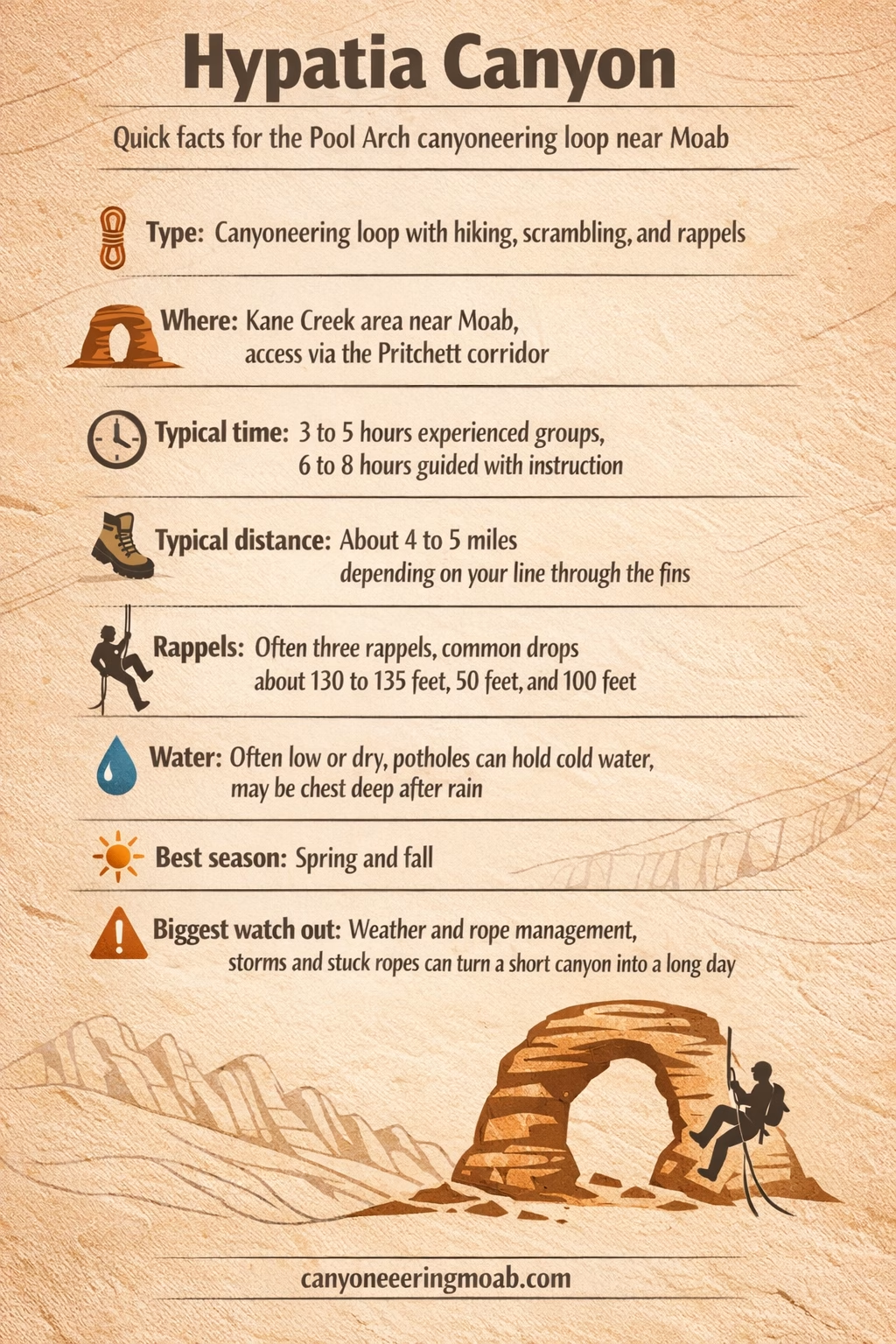
Quick Facts: Hypatia Canyon
-
Type: Canyoneering loop with hiking, scrambling, and rappels
-
Where: Kane Creek area near Moab, with access via the Pritchett corridor
-
Typical time: 3 to 5 hours for efficient experienced parties, 6 to 8 hours is common on guided days with instruction and breaks
-
Typical distance: About 4 to 5 miles, depending on your exact line through the fins
-
Rappels: Often three rappels. A common sequence is about 130 to 135 feet, 50 feet, and 100 feet. Exact drops can vary with anchor locations and route variation
-
Water: Often low or dry, but potholes can hold cold water and can be chest deep after rain
-
Best season: Spring and fall
-
Biggest watch out: Weather and rope management. This canyon is short, but a storm or a stuck rope can turn a great day into a long one
Hypatia Canyon: A Guide to the Pool Arch Canyoneering Loop Near Moab
Hypatia Canyon is one of those Moab days that feels like you found a secret door in the desert. You start on a rugged jeep road, weave through sandstone fins and sandy pockets, then slip into a short, sculpted canyon that suddenly turns into a big, airy rappel beside an arch. It is compact, dramatic, and deeply satisfying when you plan it right.
This guide is for travelers planning their first or second trip to Moab who want clear, friendly, local direction. You will learn what Hypatia Canyon is, how to tell it apart from the similar names you will see online, what the day actually feels like from car to car, and how to make smart decisions around weather, water, navigation, and rope systems.
Hypatia Canyon Canyoneering Summary
Hypatia Canyon is a half day to three quarter day canyoneering loop near Moab, Utah that combines an off trail desert approach with a short technical canyon and a memorable series of rappels near a hidden arch. Most parties hike roughly 4 to 5 miles over slickrock fins, sand, and a rugged road, then complete about three rappels including one long scenic drop that is commonly reported around 130 to 135 feet. It is best in spring and fall, and it is a strong choice for adventurous beginners only when there is competent leadership and a stable forecast.
Hypatia Canyon, Pool Arch Canyon, Rock of Ages, and Why the Names Get Confusing
If your research feels like a game of telephone, you are not alone. In this part of Moab, the same canyoneering loop is often described using different names depending on the guidebook, the website, or which landmark the writer chose to emphasize.
Here is the clean way to think about it:
-
Hypatia Canyon is a common name used by guides and visitors for this loop style canyoneering route near Kane Creek.
-
Pool Arch Canyon and Rock of Ages are widely used alternate names for the same general experience in the same drainage system.
-
Pritchett Canyon is both a broader area and a very difficult four wheel drive road. Many people hike the road corridor as part of access, which is why the word “Pritchett” shows up in so many descriptions.
How to confirm you are looking at the right route: most accurate descriptions mention a loop approach from the Kane Creek area, travel up the Pritchett corridor, views and at least one arch on approach, a short technical canyon section, and a rappel sequence that often includes a long scenic rappel near an arch plus one or two additional drops.
Is Hypatia Canyon a good fit for your group
Hypatia Canyon is a fantastic day when it matches your group. It is a stressful day when it does not.
Choose Hypatia Canyon if
-
You want a shorter technical canyon that still feels like real Moab adventure
-
You are comfortable hiking off trail across fins where the correct line is not obvious
-
At least one person in your group is truly competent with ropes, anchors, and group flow
-
Your group stays calm around exposure and does not rush near edges
Book a guide if
-
This is your first Moab canyoneering day and you want it to feel smooth and fun
-
Your group has mixed experience or mixed confidence
-
You do not want to be responsible for anchor evaluation, rope length decisions, or route finding
-
You are bringing teens or first timers who will do better with a steady coach
Skip this route for now if
-
Nobody in your group has real rappel and rope management experience
-
You are hoping for a signed trail with obvious navigation
-
Thunderstorms are possible during your time window
-
You are trying to squeeze it into a late afternoon start
Why Hypatia Canyon feels so Moab
This loop hits a sweet spot that a lot of visitors are looking for.
You get the playful movement of slickrock travel where the desert opens up in all directions. You get the small, sculpted canyon moments that make you slow down and pay attention to the stone. And you get a rappel that is not just functional, it is scenic and memorable, the kind of drop that makes you grin when your feet touch down.
It is also close enough to town that you can still clean up and make dinner without feeling like you just survived an expedition.
Getting there, parking, and what to know before you lose cell service
A common access point is the Kane Creek and Pritchett trailhead area at the end of pavement on Kane Creek Road. This is a large, well known parking area that accesses Kane Creek Road and the Pritchett corridor.
Trailhead coordinates: 38.532898, -109.600281
Driving directions from Moab
From Highway 191 in Moab, turn onto Kane Creek Road, then drive about 2 miles to the end of pavement and the large parking area.
Fees, private property, and posted rules
In the Kane Creek area, some access routes may cross private property or pass by day use fee areas. Rules and fees can change, so treat the sign at the parking area as the final word. If you see a fee box or posted instructions, follow them.
Bathrooms and water
Do not count on bathrooms at the trailhead. Bring what you need, including extra water. Many experienced locals and guides plan around 3 liters per person in warm conditions, plus electrolytes.
Cell service
Expect unreliable service. Download your maps and route notes before you leave town.
The route flow, step by step
Exact lines vary a bit, but the rhythm is consistent. Use this as your mental map for how the day usually unfolds.
Step 1: Start at the Kane Creek and Pritchett access area
This area is also used to access the Pritchett Canyon four wheel drive route. Expect off highway vehicle traffic, especially on weekends and in peak season. Move off the road early, keep kids close, and treat dust and corners like real hazards.
Step 2: Hike the rugged corridor and watch for your entry
The approach often begins on a rugged jeep road with sand, small ledges, and desert wash crossings. The key is not speed, it is attention. Many groups lose time here by drifting into the wrong drainage or wandering the fins because the terrain is a maze.
A good approach strategy is simple:
-
Confirm your map early, before you are deep in the fins
-
Use clear landmarks, not just distance, to confirm you are on track
-
If your group starts debating everything, pause, re orient, and decide calmly
Step 3: Climb and scramble through fins and gullies
Before the rappels, expect sections where you use hands and feet for progress. These moves are often not technically hard, but they can feel spicy if you are tired, if the rock is wet, or if someone in the group does not love exposure.
This is also where the route feels most unique. The fins create small ridgelines and hidden pockets that open into surprise views. Take your time here. Rushing is how ankles get tweaked and route finding gets sloppy.
Step 4: Enter the short technical canyon section
Eventually the terrain tightens and starts to look like a canyon, not just desert. You may encounter potholes that hold water. After storms, some pools can be deeper than you expect and cold enough to make people tense up.
If your group is new to canyoneering, this is often the moment where a guide shines. A calm leader turns the obstacles into a fun puzzle instead of a bottleneck.
Step 5: The rappel sequence
Most commonly, parties report about three rappels. A very common sequence is:
-
A long scenic rappel around 130 to 135 feet near an arch
-
A shorter rappel around 50 feet into an amphitheater style area
-
A final rappel around 100 feet that can feel exposed and airy
Anchor locations can change over time. Natural anchor options exist, but they require judgment. Plan your day with enough rope, enough webbing, and enough patience to do things cleanly.
Step 6: Exit the canyon and navigate back to the corridor
After the technical section, you transition back into open terrain. This is where people relax too early and then wander. Stay focused until you are clearly back on your corridor and heading back toward the trailhead.
Best time to go to Hypatia Canyon
For most visitors, the best experience is when the rock is dry, the temperatures are reasonable, and the forecast is stable.
Spring
Spring is prime. Expect comfortable hiking temperatures and good friction on dry sandstone. Spring storms still happen, so check the forecast carefully and treat thunder as a hard no.
Summer
Summer is possible, but it is not forgiving. Heat and monsoon storms are the two big problems. If you go in summer, start very early, bring extra water, and choose a different plan if storms are even a possibility.
Fall
Fall is another sweet spot. Cooler nights, pleasant days, and generally stable weather. It is also busy season in Moab, so early starts help with crowds at the rappels.
Winter
Winter can be gorgeous but serious. Cold water in potholes can be a bigger challenge than any rappel. Shorter days also mean you need efficiency. If you are not confident moving quickly through rope transitions, choose a different canyon or go with a guide.
Weather, Water, and the Rules That Keep This Fun
Moab weather can look harmless right until it is not. Canyons compress risk.
Storm decision rules
Use these rules like a checklist, not a vibe:
-
If thunderstorms are possible during your time window, choose a different plan.
-
If you hear thunder, even far away, turn around and move toward open, higher ground.
-
If the rock is wet, treat friction as compromised and move conservatively.
-
If it rained recently, assume potholes are deeper, water is colder, and your day will be slower.
A stable forecast is the best upgrade you can give yourself on this canyon.
Water reality
This canyon is often low water, but potholes can linger. In cooler months, cold water is a bigger problem than deep water. If you are not prepared for a cold wade, you can get chilled fast and then mistakes happen.
Anchor and rope readiness for Hypatia Canyon
Most rough days here are not because the canyon is “hard.” They are because systems are not dialed.
What you want to be ready for
-
A longest rappel that is commonly around 130 to 135 feet, with real world variation based on where the anchor sits
-
The possibility that you need to back up or rebuild an anchor responsibly
-
Clean rope management so you do not create tangles, stuck pulls, or slow transitions
Practical readiness basics
-
Bring rope length and contingency that match the longest drop plus rigging realities
-
Carry webbing and quick links if your group might need to repair or replace an anchor responsibly
-
Have a plan for stuck rope that does not involve desperate pulling from unsafe positions
-
If nobody in your group is confident evaluating anchors, that is a strong sign to hire a guide
Anchor ethics in a high use Moab canyon
Moab anchors evolve. Webbing gets sun baked. Hardware disappears. People “clean up” anchors. Sometimes that is good, sometimes it is not.
The best ethic is simple: minimize impact, avoid leaving junk, and never trust an anchor just because it exists. Inspect, back up when appropriate, and make conservative decisions.
Time planning that actually matches the desert
Hypatia Canyon looks short on paper, but Moab terrain stretches time.
Typical timing ranges
-
Efficient experienced party: 3 to 5 hours
-
First timers or larger groups: 5 to 7 hours
-
Guided days with instruction and breaks: 6 to 8 hours is common
The best start time
Start in the morning. Early starts give you cooler hiking, better friction, better light near the arches, and fewer bottlenecks at rappels.
In warmer months, the goal is to be hiking out before the heat peaks. In winter, the goal is to have daylight margin in case a rappel takes longer than expected.
Terrain and desert realities you should not ignore
Slickrock friction changes fast
Dry sandstone can feel grippy and confidence building. Wet sandstone is a different sport. If there is recent rain or lingering moisture, slow down and be conservative.
Sun exposure is constant
There is not much shade. Even in spring and fall, you can get toasted out here. Sun protection and water matter more than you think.
Shared use corridor
Parts of access are used by off highway vehicles. Stay alert on the road corridor, yield politely, and step aside early. You will have a better day if you treat the corridor like a road, not a trail.
What to pack for Hypatia Canyon
This is a practical baseline. Adjust for season and water.
Technical essentials
-
Harness and helmet for every person
-
Rappel device you know how to use
-
Gloves for rope work
-
Rope appropriate for the longest rappel plus contingency
-
Webbing and quick links for anchor maintenance if your group is responsible for that
-
A method to manage rope cleanly and avoid tangles
Comfort and safety essentials
-
Plenty of water. A strong warm weather rule is about 3 liters per person
-
Electrolytes in warm months
-
Sun protection you will actually wear
-
Layers that match the season, especially in shoulder seasons and winter
-
Headlamp, even on a short day
-
Small first aid kit plus blister care
-
Food that matches your time window
Clothing notes that matter here
Wear shoes with good grip that you do not mind getting wet. Avoid anything that limits movement during scrambles. In cooler months, plan for the possibility of cold water in potholes and bring a warm layer that still works when damp.
Guided versus Self Guided: When a Guide is The Right Choice
If you want your first Moab canyon day to feel confident and fun, a guide is one of the best upgrades you can buy.
A good guide does not just keep you safe. They choose clean lines through the fins, manage ropes efficiently, coach people through fear without pressure, and keep the whole group moving. They also remove the mental load of anchor evaluation and route finding, which is where many visitors burn energy and time.
If you are visiting in spring or fall, book early. This style of canyon day is popular.
Common mistakes to avoid
-
Starting late and hiking out in the hottest part of the day
-
Underestimating how slow fins and sand can be
-
Showing up without a clear rope plan for the longest rappel
-
Treating anchors as permanent instead of inspecting and thinking
-
Letting the group relax too early on the exit and wandering off line
-
Going with stormy forecasts because “it probably will not hit us”
Three quick insights to keep in your pocket
If you only remember one thing
Do not treat Hypatia Canyon like a normal hike. It is a technical route that deserves a real plan.
Local insight
Most delays happen before you even reach the rappels. Tight navigation through the fins saves more time than moving fast.
Pro tip
Start early for cooler rock and calmer rope transitions. The whole day feels smoother when you are not racing the sun.
How to build a perfect Moab day around Hypatia Canyon
A great Hypatia day leaves you pleasantly tired, not wrecked. Plan something low key afterward.
-
Grab a relaxed dinner in town and let the desert dust settle
-
Choose a sunset viewpoint that does not require more effort than you want to give
-
If you want another adventure the next day, pick something non technical so your hands and legs get a break
For more planning help, explore more canyoneering routes, Moab itineraries, and gear guidance on canyoneeringmoab.com.